

MIDLIFE AND MENOPAUSE: a bridge to new possibility
When I started perimenopause- at least noticeably- I was backstage waiting for a cue light. I was performing in Danny, King of the Basement at Seattle Children’s Theatre. I suddenly, out of nowhere, became flushed with sweat, dripping within less than a minute. Then the wonderful young actor playing my son whispered my name and pointed at the light. I went on, played a very emotional scene, walked off for my quick change. My dresser peeled my sopping clothes off and replaced them. I went back on. That was my first hot flash.
I was 42 at that time; I was stuck in an abusive marriage I couldn’t see a way out of. I had a 5 year old and a 10 year old. Working as an actor again in my 40s after being home with my kids was miraculous. It reminded me I was alive. It was my first thread to uncovering another possibility.
3 years later I left my marriage. It was a harrowing time. I didn’t think I would have a relationship again. I didn’t think I would be able to support myself and my kids in a meaningful way. I was leaving the script I had been given in tatters and I didn’t have a map.
14 years later, and a few years post menopause, I see this period of my midlife as the most profound transformation. I found a new, interdependent way of living as a single mother. I have loved deeply and well. I have a full career as yoga therapist that brings my life so much joy and meaning.
My menopause was a huge part of this, and my lifelong yoga practice is what allowed me to direct the energy of the changes both my body and life were moving through into a creative process of living.
None of that has been easy. If I am honest, much of it still isn’t easy. But it’s also become very rich.
In my initial work with hormonal challenges, which began over 25 years ago, when I was specializing in prenatal and postnatal yoga, and between my own pregnancies, I started to notice that in the windows when the “cushioning” hormones came off- postnatal, premenstrual, birth- were also times when the rawest truth would surface. I started to see that while the world- thank you, patriarchy- saw these raw emotions as inconvenient and messy and disregulated, that my clients and students often came to profound realizations at these times.
What happens in menopause as the cushioning of estrogen comes off is that we start to see the bones, the marrow, the deeper structures holding us up- and those that do not. We experience quickly what needs support. And that is real. We come right up against our needs. And just as with everything else about living in a body born with parts related to these estrogen-and progesterone- driven cycles, we are shamed for our needs that don’t fit the script we’ve been given. We are taught that our bodies are made for reproduction, for service to others, that our destiny is nurturance. And that menopause is decline.
But as we finally have science researching menopause and the changes our bodies go through, a much richer and more complex picture emerges. For example, our ovaries are not just dead when they stop producing eggs. Recent research shows that they actually transform into part of our immune system! Our uterus is not going to bear children or more children, but it remains an important part of our pelvic floor, circulation to our whole pelvis, and remains an active part of orgasm. When I look at amazing facts like these, I begin to cherish the changes, seeing that while I may not adore every aspect of aging, there are many that feel beneficial to this new phase of my life in which there is more opportunity to direct my life energy towards my own meaning and purpose.
My experience with hot flashes was not extensive; my biggest challenge was a frozen shoulder 3 years ago, which I didn’t know could be a menopausal thing until I was in the middle of it. It should probably be called “frozen side” because its everything connected to your shoulder that can’t move. The pain is intense, but the immobility is what I found most scary and most humbling. It took me a year to find “normal” range; 6 months more to find my own range, strength and mobility, but I did it- I got back to headstands and handstands, and most deliciously raising my arms over my head, something I will never again take for granted. I had to learn to move again, to re-experience the movement of my arm, I had to let myself learn a deeper patience without ever assuming I would move the way I was used to. In that letting go I uncovered a way of connecting to deeper layers of the body with subtle, even microscopic movement that I have folded into the work I do with all of my clients and students.
In each challenge through my life, my practice has been pivotal not just in healing into a goal, but in helping me to reorganize my life view when I have outgrown the place I have been living from. There have been profound and even devastating letting-gos. In these, I experience an end, a grief, a goodbye. And a new possibility.
I am writing this from Kripalu Center for Yoga and Healing in Massachusetts. I am looking out the window of the private room I was gifted with for the week, at glorious fall-painted trees. I am in the company of remarkable colleagues- all of us gathered for the week for the work we do to bring the healing of yoga and yoga therapy to underserved places and populations. All of us have received a grant in the past 25 years from The Jonathan P. Schwartz Diversity Fund- my own was to expand the therapeutic yoga program I create in partnership with Swedish MS Center in Seattle, for people navigating multiple sclerosis and other neurological challenges. I received it in 2020 right in the middle of the pandemic shutdown. It allowed us to connect more often online when many were even more restricted than the general population due to immune compromise, and continues to hold space for this community of beautiful humans.
All of my work centers making yoga accessible and practical for people navigating challenge in some way- whether through chronic illness, such as MS or cancer, through postnatal mental health, through chronic physical or emotional pain or chronic trauma, PTSD, and the rollercoaster of sexual and intimate partner violence. My passion is the inherent wholeness of each person, and finding the ways they might touch on that innate beauty. I love the work I do so much, I am so lucky to spend my time on earth this way.
Midlife brought me here. Menopause has been a bridge.
My marriage had not been a safe or healthy place for many years; but when I hit perimenopause, I had a much harder time continuing to appease and regulate my ex-husband’s nervous system. My anger had sharper edges, it cut into me when I was silent. I couldn’t dive under my softness; I was suddenly full of desire, not for anything I had been conditioned to believe fulfilling- husband, children, home- but for my own life.
When I hold this image of my ovaries transforming from a reproductive organ to part of my immune system, what arises are images of boundaries. In yoga therapy philosophy, the immune system has a lot to do with boundaries- what we want to bring close, what we want space from; what to respond to and with how much energy. I feel this in my body these days, this precise discernment: yes this, no that; maybe, depending, but not until I’m ready.
On a practical level, menopause, midlife and aging all demand a closer and more deliberate attunement to the needs of our selves on all levels- yes our physical body needs more care and so also do our energetic, emotional, mental and spiritual selves. As we age, and also in hormonal transitions, Vata, the expression of air and ether increases; our tissues become dryer, cooler; warmth, structure and moisture become more essential. In movement, this looks like the nurture of our joints and connective tissue before placing high physical demands on ourselves; energetically it requires stabilizing with rhythm in our day, perhaps utilizing the powerful tools of pranayama (breath) and restorative poses; emotionally it requires space and voice for our honest, unconditioned selves and responses; mentally it requires openness to new experience; and spiritually it requires an increased deliberateness and intentionality in our actions, and perhaps most difficult, letting go of the outcome.
When I first got the invitation to join my colleagues this week, I made the assumption I could not go. I have been a fully single parent, without a participating coparent, for over seven years. My kids are amazing young adults who for now have some high support needs. I am so grateful to have them with me at home, to nurture them as best I can through their own life transition into adulthood. I have only left them for a few days on their own, and only in the past year- and I’ve never left them while I flew across the country. But when I spoke to them, they said they were ready and “You should go for it, Mama!” I was with a dear friend at the time who helped me accept that this was a possibility, and that it was also the beginning of a new phase of my life.
One thing I wrote over the last few days is that when I gave birth to my children, I gave birth to new parts of myself. Now, as I give birth to this new, midlife self, I am also giving them the opportunity to birth their own new parts.
Practice in transitional phases must be grounded in stabilizing the nervous system. Active practice and movement has a part to play in that. But the piece most people are missing tends to be intentional rest. Not the kind where you collapse into bed, but the kind where you intentionally pause, create a buffer between you and the world by slowing down, and stop chasing intensity.
Restorative yoga can be a wonderful way to bring this stability. Restorative poses are fully supported by props so your body can rest fully into the shapes. The poses themselves are simple; there are hundreds of variations that change their effect in subtle ways. Their effect also shifts according to the way they are sequenced.
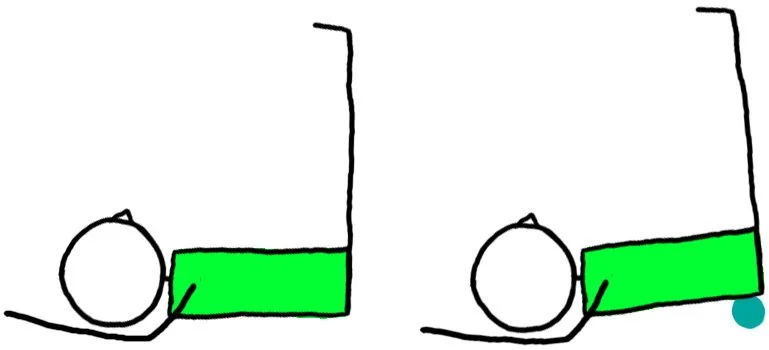
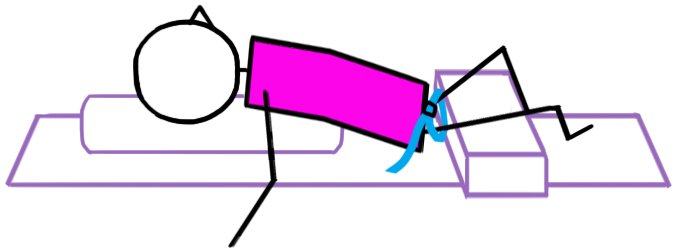
Two of my favorite poses are viparita karani, inverted lake- also known as legs up the wall- and reclining bound angle.
Legs up the wall variations: you can also put your legs on a chair
Reclining Bound Angle variations:
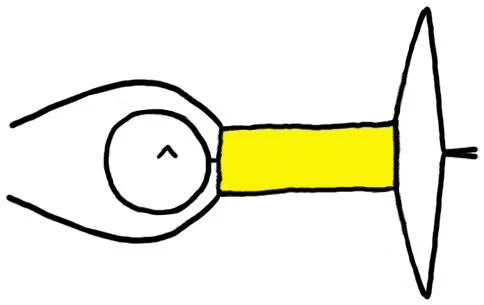
As a very general example, you might try this sequence for hot flashes, cramping, or insomnia:
1.Reclining Bound Angle
2.Legs Up the Wall
3.Reclining Bound Angle
Or this sequence for brain fog, depression, or joint pain:
Legs Up the Wall
Reclining Bound Angle
Legs Up the wall
Play with the sequencing of these 2 poses and see what you can discover about yourself.!
I am excited to teach my workshop, Therapeutic Yoga for Menopause and Beyond: Transition and Transformation beginning next Tuesday, October 6!
Info and Registration Here: